Need Help?
Please leave your contact information to get our latest catalog
Get In Touch Now >


Author:SOP Work Pods Manufacturer TIME:2026-08-28
Sound proof meeting booths should be commissioned around private collaboration, not an undefined promise of silence. The relevant question is whether a named group can enter, discuss, share material, include remote participants, and leave without exposing content or adopting awkward workarounds.
A collaboration boundary map follows speakers, intended listeners, unintended listeners, screens, documents, devices, doors, ventilation paths, and transition moments. It also records the meetings that do not belong in the enclosure. This keeps the final decision tied to observable use and to the exact installed condition.
For sensitive sessions, use harmless substitute content during privacy observation and document the normal operating condition. The aim is to test the route without exposing real confidential material or presenting the exercise as a laboratory measurement.
Repeat the route with participants arriving separately, waiting nearby, opening the door, changing speakers, sharing a screen, and leaving while ordinary office activity continues. Note where context becomes visible or audible before and after the enclosed discussion. This transition record often changes placement, queue rules, screen orientation, and the meetings that should remain in a fully controlled room.
A private-collaboration release should also name the failure response. Users need to know how to report a door, fan, power, data, or device problem; which room becomes the fallback; and who decides that the booth can return to service. Privacy depends on this operating discipline as much as on the initial handover visit.
Repeat critical observations after correction so the acceptance record reflects the final installed condition rather than the first inspection.
Organize the next evidence around Draw the Boundary Around Private Collaboration. Separate confidential conversations, routine discussion, interviews, consultations, document review, hybrid meetings, short decision sessions, participant roles, occupancy, duration, speech level, sensitive material, devices, movement, urgency, wait tolerance, fallback, and meetings that need a larger or differently equipped room. Compare alternatives under the same location, user, and operating-period assumptions.
Apply a participant and listener witness before approval. Observe current collaboration and write session profiles with success conditions and explicit exclusions before selecting the booth. Preserve contrary observations and scope limits because the word meeting covering incompatible tasks and occupancies would change the buyer conclusion.
Use the gathered record to decide how to approve eligible collaboration profiles. Name the correction owner and the point at which another check is required.
Map Speakers Listeners and Exposed Transitions narrows a broad product claim to a defined operating condition. Locate every participant, remote participant, nearby desk, corridor, waiting point, entry route, unintended listener, glazing angle, screen sightline, door, seals, joints, ventilation opening, ceiling and floor interface, reflected path, approach, entry, exit, and the distinction between audibility and intelligibility. State the boundary that prevents this observation from becoming a general product claim.
Apply a participant and listener witness before approval. Run ordinary speech and sensitive-content substitutes from representative positions with normal fan and door operation. Preserve contrary observations and scope limits because privacy inside the booth hiding exposure at approaches or transitions would change the buyer conclusion.
Resolve this part by deciding how to state the bounded privacy field. Keep model identity, evidence scope, and accepted exception beside the disposition.
| Collaboration stage | Participant action | Possible exposure path | Commissioning evidence |
|---|---|---|---|
| Approach | Wait, greet, prepare material | Queue, glazing, audible context | Route observation |
| Working session | Speak, point, share screen, use devices | Door, ventilation, sightline, remote audio | Occupied agenda and listener notes |
| Transition | Open door, exit, reset, hand over | Conversation tail, visible documents, next-user overlap | Departure and turnover record |
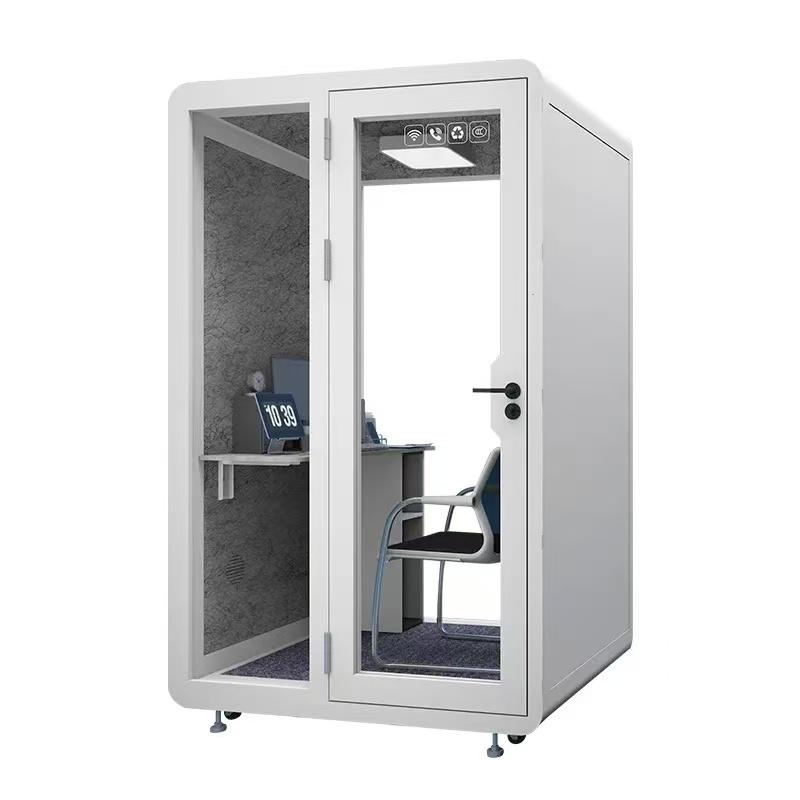
Use Watch How Participants Actually Share the Space to connect the documents with occupied behavior. Check entry order, threshold, seating, table, knees and elbows, personal space, documents, laptops, eye contact, turn-taking, pointing, shared screen visibility, reach, controls, lighting, glare, airflow, temperature perception, fan sound, movement, breaks, exit, and whether users lean, raise voices, open the door, or shorten the session. Retain the device, occupancy, and session condition used for the trial.
Apply a participant and listener witness before approval. Have the intended participant count complete the longest eligible collaborative task without observer coaching. Preserve contrary observations and scope limits because nominal capacity preventing natural interaction would change the buyer conclusion.
The occupied trial should end with a decision about how to release an occupied collaboration envelope. Record the occupied condition and any change that could invalidate the trial.
Stress the Hybrid Chain With Ordinary Devices tests whether the proposed configuration survives its site context. Review power, charging, data and wireless condition, cable routes, camera field, framing of all participants, microphone pickup, loudspeaker or headset, echo, display, content sharing, lighting, platform and device compatibility, remote turn-taking, controls, support, setup, reset, and recovery after connection or device failure. Record any site change that would require this decision to be revisited.
Apply a participant and listener witness before approval. Run the normal hybrid workflow and collect separate observations from each onsite participant and at least one remote participant. Preserve contrary observations and scope limits because onsite users accepting a session that remote participants cannot follow would change the buyer conclusion.
Before moving forward, decide how to approve a repeatable hybrid setup. Attach the relevant site interface and responsible project party to the finding.
Operational ownership becomes visible under Place Comfort and Site Fit in the Same Trial. Check proposed surrounding activity, listener routes, privacy adjacency, circulation, accessibility review, delivery, assembly, floor, power, data, ventilation interaction, detectors and other project interfaces, sunlight, glare, return air, cleaning access, maintenance access, door swing, airflow, thermal perception, equipment heat, duration, and controls. Name the service owner and fallback before treating the route as available.
Apply a participant and listener witness before approval. Mark the footprint, complete a site review, and hold the occupied session under representative local activity. Preserve contrary observations and scope limits because a capable booth becoming unsuitable after placement would change the buyer conclusion.
Assign the responsible owner, then decide how to release the installed collaboration condition. Link each operating fault to an escalation route, correction, and fallback.
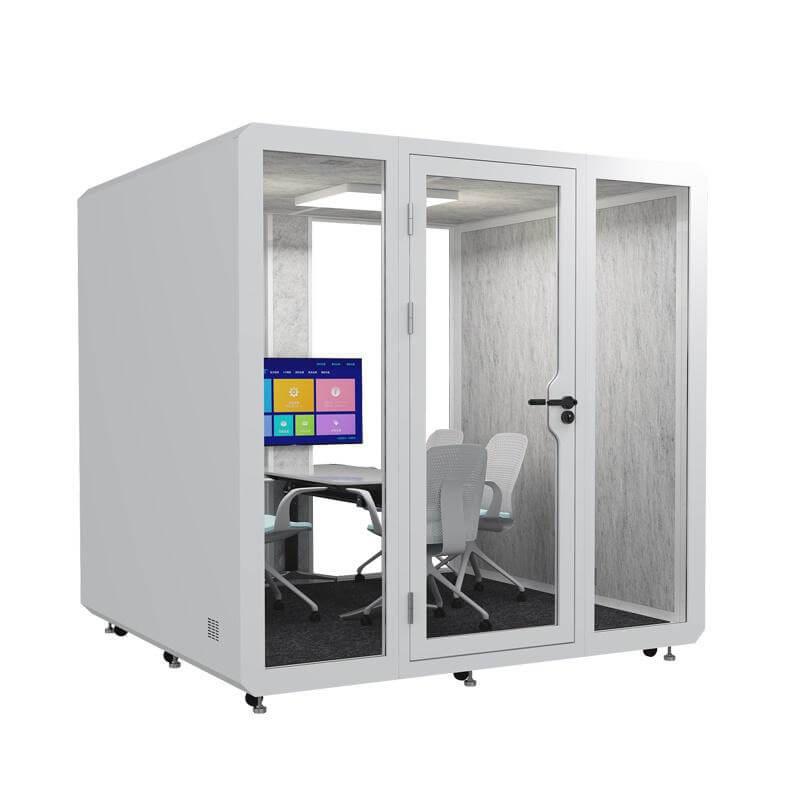
Protect Privacy Through Booking and Turnover turns the preceding evidence into a controlled release question. Set room label, eligible occupancy, booking duration, setup allowance, overrun, no-show, walk-up use, queue, sensitive-material handling, belongings, exit, reset, cleaning, ventilation recovery, availability cues, fault reporting, isolation, maintenance, parts, downtime communication, support, and alternative private rooms. Carry the limitation and review trigger into the final release record.
Apply a participant and listener witness before approval. Rehearse consecutive meetings, a late session, a cleaning interval, a technology reset, and an unavailable booth with operating owners. Preserve contrary observations and scope limits because private collaboration capacity becoming unreliable or exposed between users would change the buyer conclusion.
The release entry must state how to decide how to approve operating and fallback rules. State the final disposition, remaining exception, and trigger for another review.
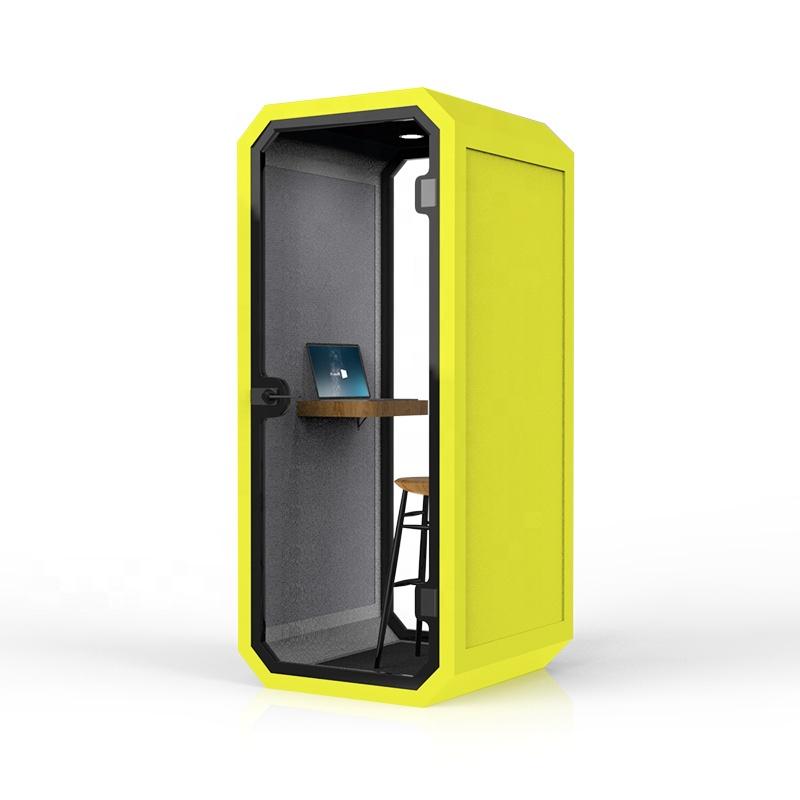
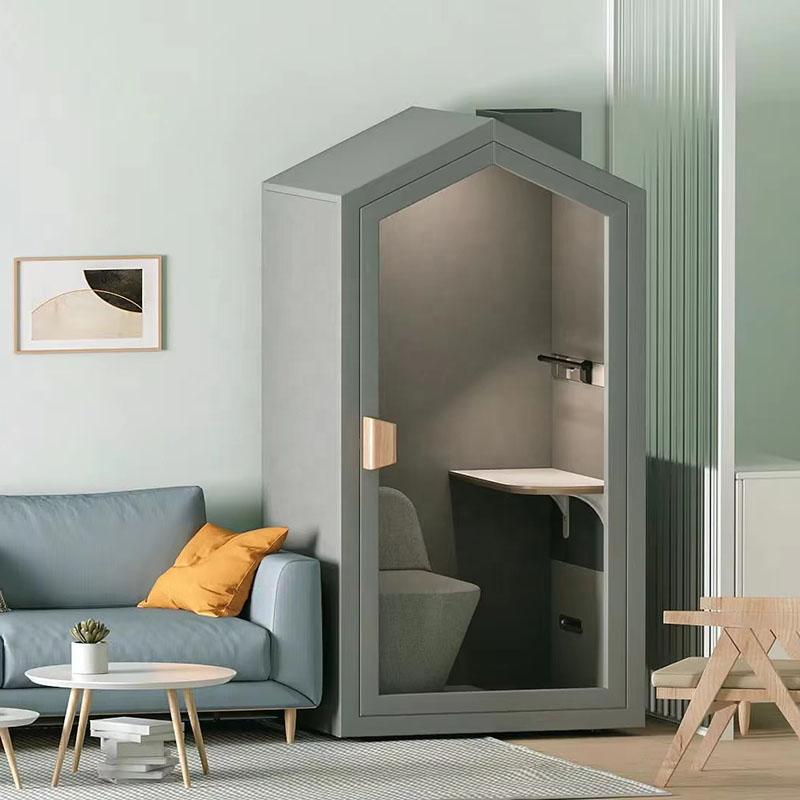
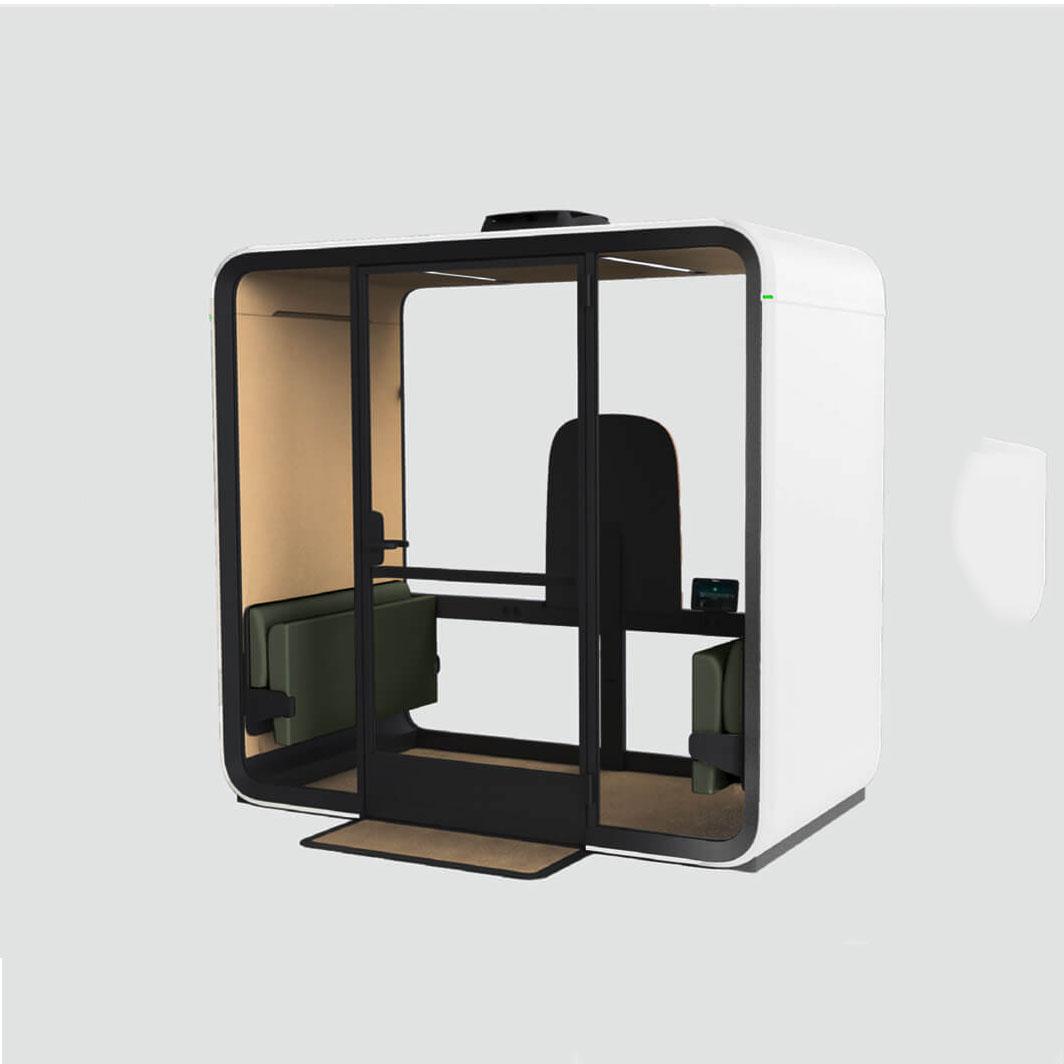
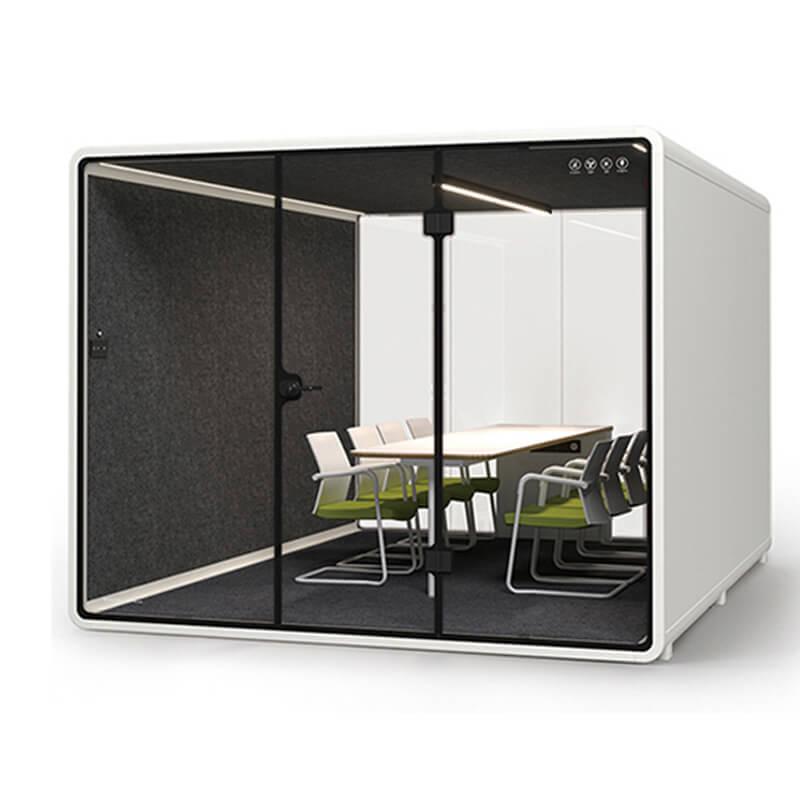
Use the meeting-pod reference to identify a configuration for commissioning, while keeping acceptance tied to the collaboration boundary: review the relevant product configuration.
Commission the Complete Collaboration Route opens with the task evidence that the buyer can actually observe. Verify model and configuration, assembly, door, seals, ventilation, lighting, controls, power, data, furniture, privacy paths, occupied interaction, hybrid technology, location, access, booking, turnover, cleaning, faults, support, documents, defects, corrections, limitations, user guidance, and acceptance authority. Keep the finding attached to the named task, users, and observed condition.
Apply a participant and listener witness before approval. Run a complete collaboration scenario from booking through reset and close every mandatory condition with evidence or correction and retest. Preserve contrary observations and scope limits because installation completion being mistaken for private-collaboration acceptance would change the buyer conclusion.
The output is a documented decision about how to sign off the complete meeting service. Preserve the source, observed condition, unresolved limit, and decision owner together.
Final operating note. Mark the footprint, complete a site review, and hold the occupied session under representative local activity. Check proposed surrounding activity, listener routes, privacy adjacency, circulation, accessibility review, delivery, assembly, floor, power, data, ventilation interaction, detectors and other project interfaces, sunlight, glare, return air, cleaning access, maintenance access, door swing, airflow, thermal perception, equipment heat, duration, and controls. Keep this conclusion bounded while a capable booth becoming unsuitable after placement remains possible.
Observe current collaboration and write session profiles with success conditions and explicit exclusions before selecting the booth. Separate confidential conversations, routine discussion, interviews, consultations, document review, hybrid meetings, short decision sessions, participant roles, occupancy, duration, speech level, sensitive material, devices, movement, urgency, wait tolerance, fallback, and meetings that need a larger or differently equipped room. Keep this conclusion bounded while the word meeting covering incompatible tasks and occupancies remains possible.
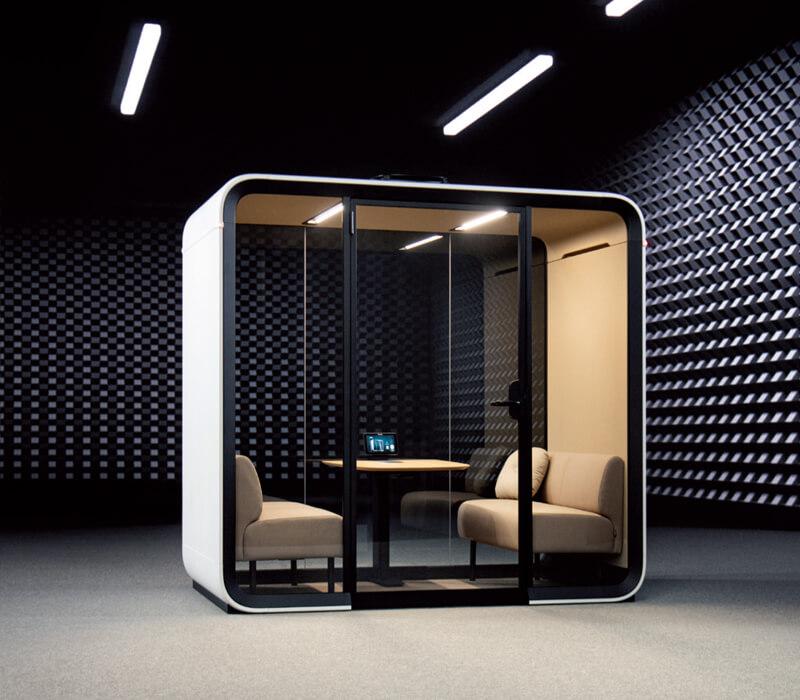
Run ordinary speech and sensitive-content substitutes from representative positions with normal fan and door operation. Locate every participant, remote participant, nearby desk, corridor, waiting point, entry route, unintended listener, glazing angle, screen sightline, door, seals, joints, ventilation opening, ceiling and floor interface, reflected path, approach, entry, exit, and the distinction between audibility and intelligibility. Keep this conclusion bounded while privacy inside the booth hiding exposure at approaches or transitions remains possible.
Have the intended participant count complete the longest eligible collaborative task without observer coaching. Check entry order, threshold, seating, table, knees and elbows, personal space, documents, laptops, eye contact, turn-taking, pointing, shared screen visibility, reach, controls, lighting, glare, airflow, temperature perception, fan sound, movement, breaks, exit, and whether users lean, raise voices, open the door, or shorten the session. Keep this conclusion bounded while nominal capacity preventing natural interaction remains possible.
Run the normal hybrid workflow and collect separate observations from each onsite participant and at least one remote participant. Review power, charging, data and wireless condition, cable routes, camera field, framing of all participants, microphone pickup, loudspeaker or headset, echo, display, content sharing, lighting, platform and device compatibility, remote turn-taking, controls, support, setup, reset, and recovery after connection or device failure. Keep this conclusion bounded while onsite users accepting a session that remote participants cannot follow remains possible.
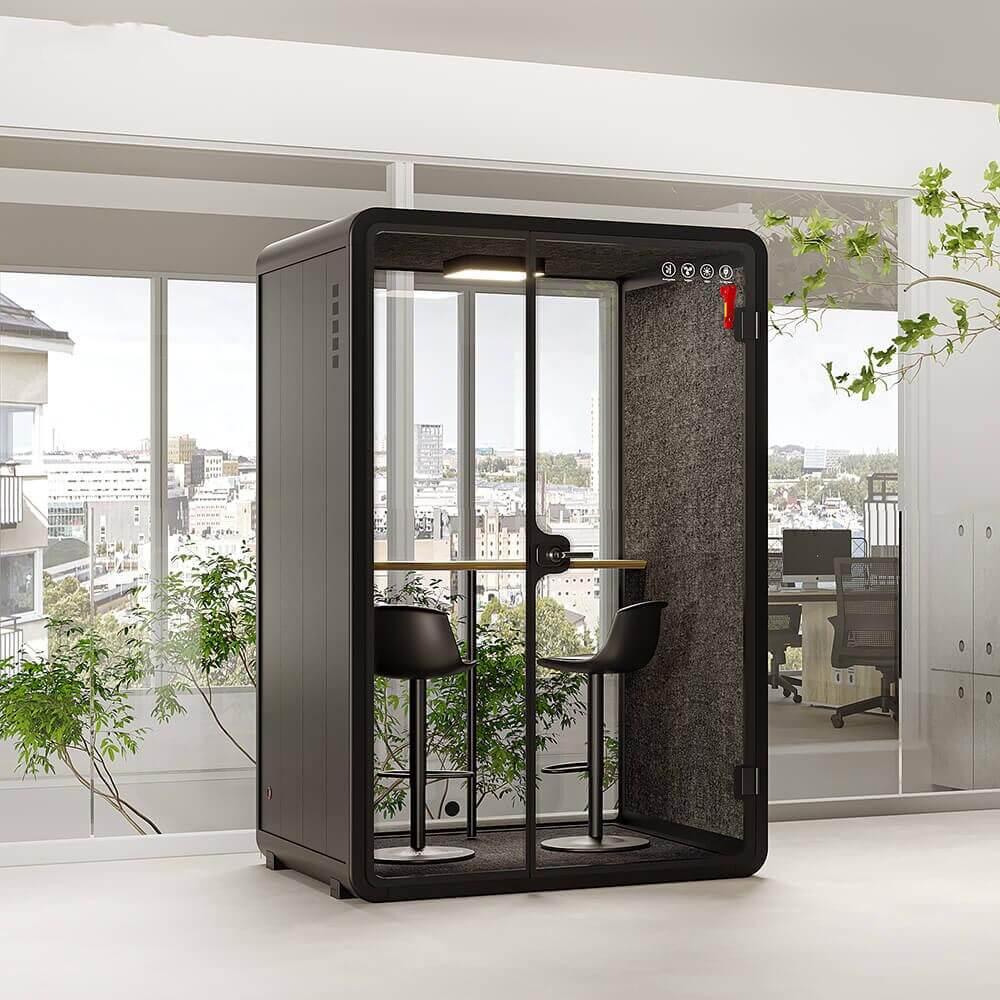
Sound proof meeting booths are a modern collaboration option when the installed space supports defined participants, material, speech boundaries, technology, comfort, and transitions as one route. The word soundproof should never replace configuration-specific evidence and an observed listener condition.
Commission the route rather than the enclosure alone. Preserve the session profiles, speaker-listener map, device setup, site condition, limits, faults, corrections, booking rule, and fallback. That record states exactly what private collaboration was accepted and what still requires another room.

 Tel: +8613538031763
 Email: info@sopworkpod.com
 MP/WhatsApp: +8613538031763
 Manufacturer Address:Liucheng Lujiang District,Meixi Road,Nanan City,Fujian,China