

A project discussion is moving easily at an open table until a nearby video call begins. One person starts speaking louder, two others stop sharing an unfinished idea, and the caller walks away to search for privacy. The office did not become less social because someone wanted enclosure. It became less social because incompatible conversations were competing for the same acoustic and behavioral space.
A soundproof isolation booth can change that competition in four possible ways: relocate disruptive calls, keep collaboration zones available for group exchange, let people join private or sensitive conversations without leaving the workplace, and make shared-space expectations easier to follow. None of these effects is automatic. Placement, access, booking, comfort, privacy, visibility, faults, and office culture may support the mechanism or reverse it.
Treat the claim as a four-part workplace hypothesis. Observe a baseline, introduce the booth for defined tasks, compare behavior, and look deliberately for adverse effects such as avoidance, queue conflict, isolation, surveillance concern, inaccessible use, or the loss of useful floor space. The outcome is a retain, revise, relocate, or stop decision for each social mechanism, not a slogan that enclosure always improves community.
Map social exchange before introducing the isolation booth
Observe where spontaneous questions, mentoring, greetings, project discussion, informal breaks, focused work, confidential calls, and video meetings currently occur. Note who participates, who withdraws, which activities interrupt others, and what people do when no appropriate room is available. Preserve time, zone, attendance, team norms, and nearby room supply so later changes are not credited to the booth without context.
Define social quality through observable behavior rather than a general mood score. Useful indicators include a conversation continuing without a nearby caller raising their voice, a private participant remaining onsite, a collaboration area staying available, a clear handoff from open discussion to enclosed call, and users returning to shared space after the task. Include negative observations and people for whom the booth route is inaccessible or uncomfortable.
Sample more than one office rhythm. A quiet attendance day can exaggerate availability, while a launch or visitor event can exaggerate conflict. Record recurring periods, teams, locations, and alternative rooms, and repeat the baseline where conditions differ. The pilot should compare like with like as far as practical and state where changed attendance or project activity limits the comparison.
Test whether call relocation protects shared conversation
Assign the booth to calls that currently spill speech into shared zones. Follow the route from call trigger to finding, entering, connecting, completing, and leaving. Observe whether nearby conversation continues, whether the caller can speak normally, whether external listeners remain concerned, and whether walking distance or queues cause the caller to stay at the desk anyway.
The mechanism passes only when the relocation works at the moment of need. A booth that is frequently booked, difficult to discover, too warm for normal duration, faulty, or placed far from the affected team may not protect shared exchange. Record failed attempts beside successful ones. Correct labels, access, location, support, or quantity before declaring that the booth changed office behavior.
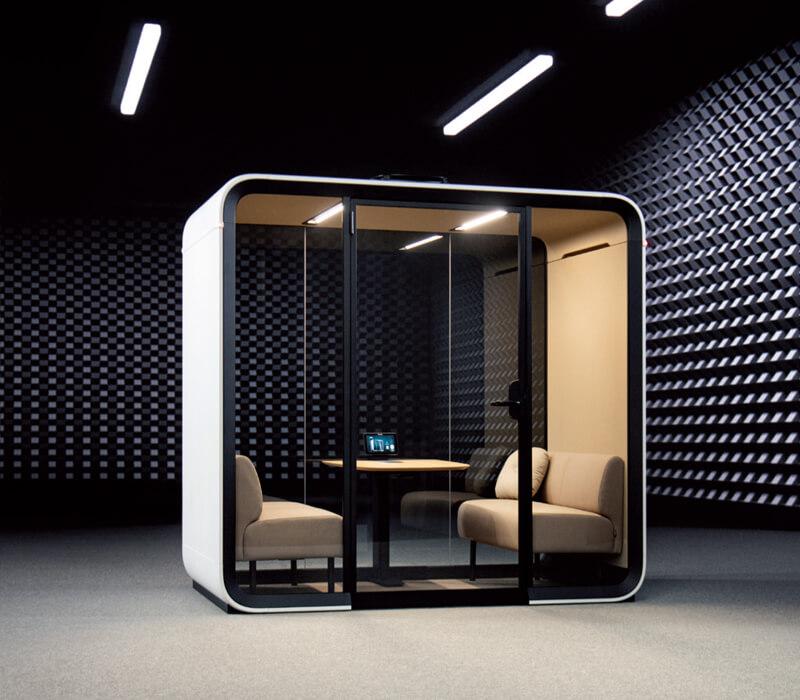
Keep collaboration zones available for the interaction they support
Open project tables and soft seating often support sketching, quick review, mentoring, and conversations that benefit from visibility and easy entry. Track whether solo calls and private video meetings previously displaced those activities. After the booth is introduced, observe whether group exchange returns, whether people understand the division of roles, and whether a new queue forms around the collaboration area or pod door.
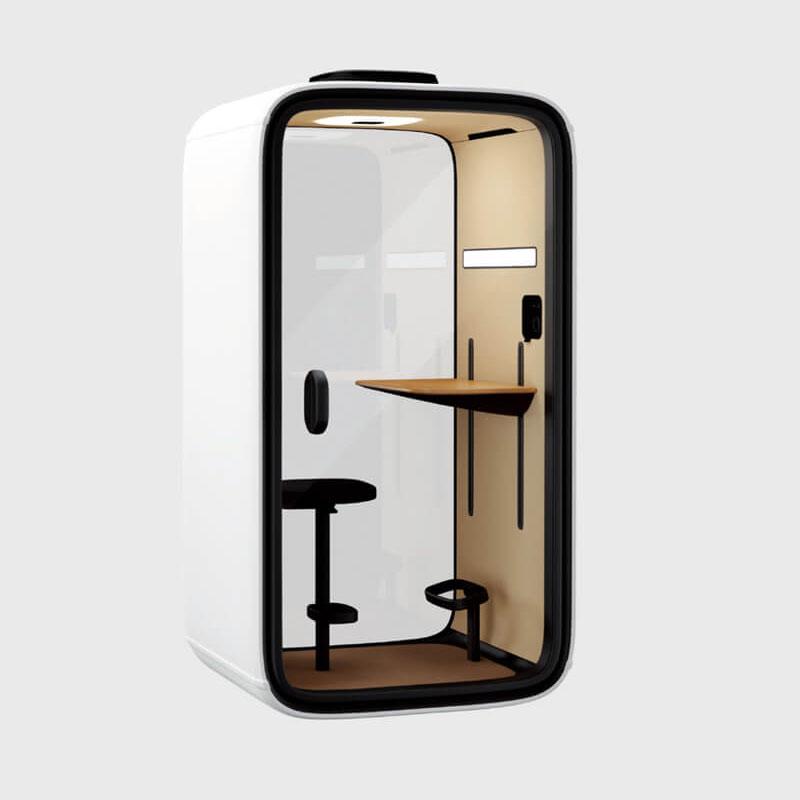
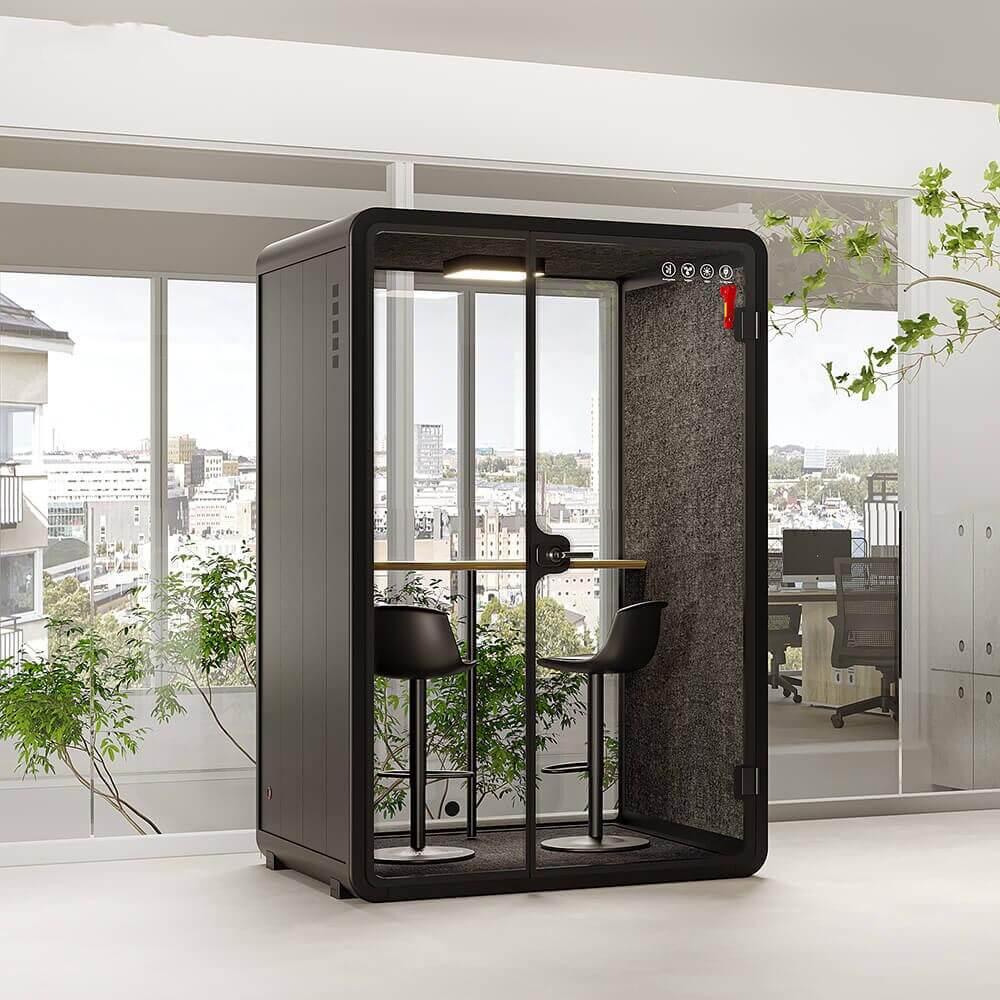
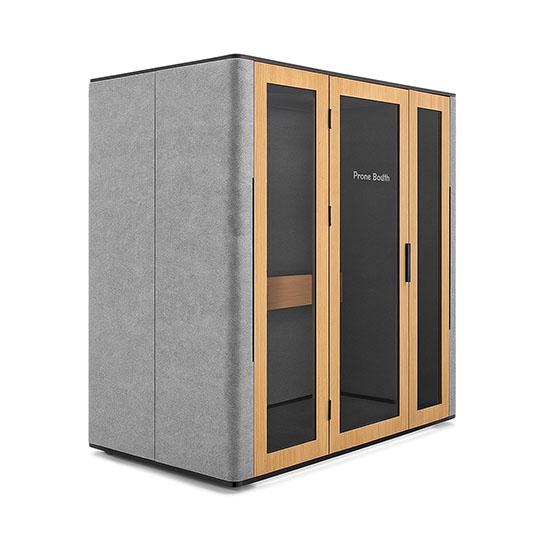
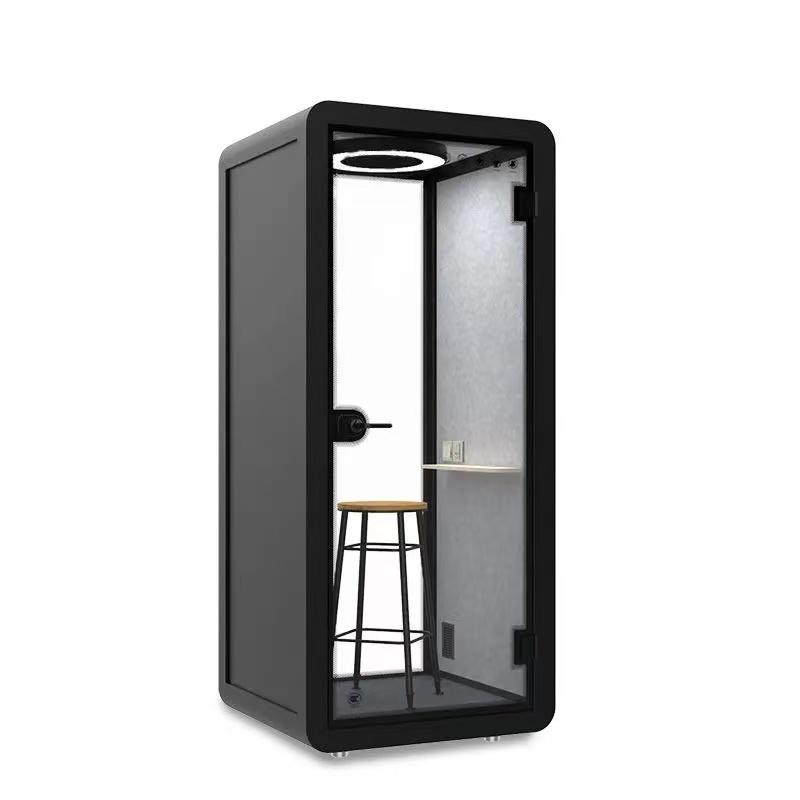
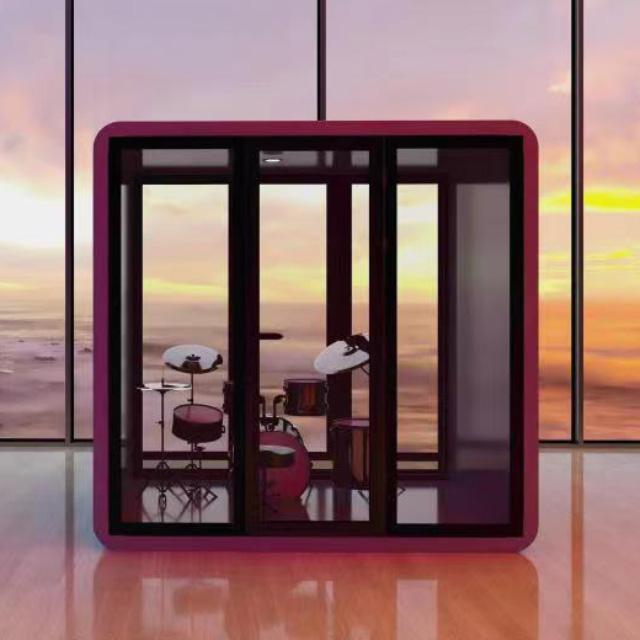
Do not protect every open zone from every sound. Some collaboration is naturally active, and over-policing it can reduce social value. The operating rule should separate work that needs enclosure from work that benefits from shared presence. Review the office pod range only after those roles are stated, because product capacity cannot decide which interaction the workplace intends to preserve.
Follow what happens at the boundary between these roles. A quick open discussion may lead to a private client call, or a booth call may need a group debrief afterward. Observe whether people can make that transition without losing participants, equipment, or context. A useful booth complements the shared area; it should not fragment a workflow into disconnected locations simply to keep the floor quiet.
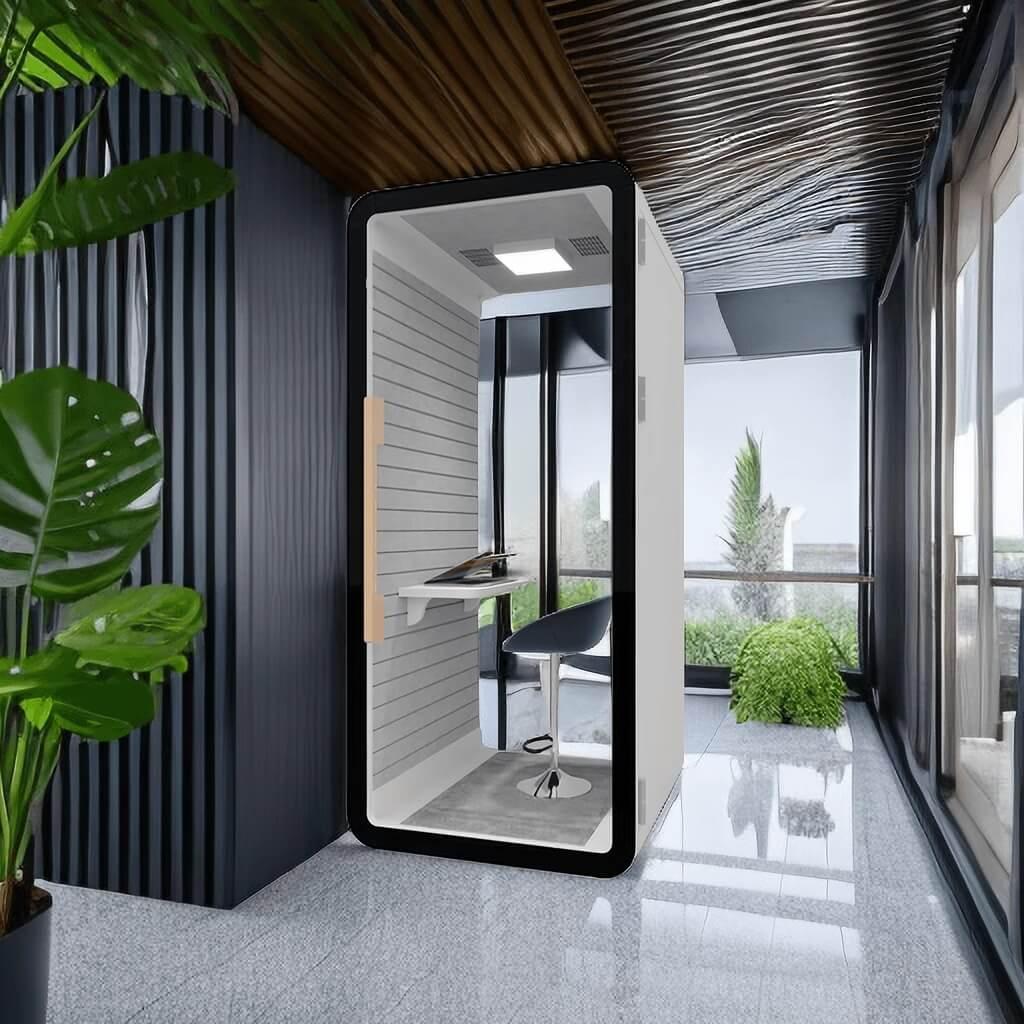
With collaboration and call roles separated, the office pod options can provide configuration context, but the observed handoff remains the basis for the social decision.
Use private participation to keep sensitive work connected to office life
Interviews, HR conversations, client escalations, health-related calls, and personal matters may push people to leave the office, postpone the discussion, or speak cautiously at a desk. Test whether the booth gives these users a realistic onsite route. Observe availability, approach, visibility, speech-listener positions, device setup, call quality, duration, and the user's return to normal work afterward.
Privacy should be assessed for the task and location, not inferred from the word soundproof. Include external listener concern, glazing sightlines, screens, queues, door state, and surrounding movement. Some users may feel conspicuous entering a booth for sensitive work. Placement, occupancy cues, booking labels, and policy should avoid advertising the nature of the conversation while still making the space discoverable.
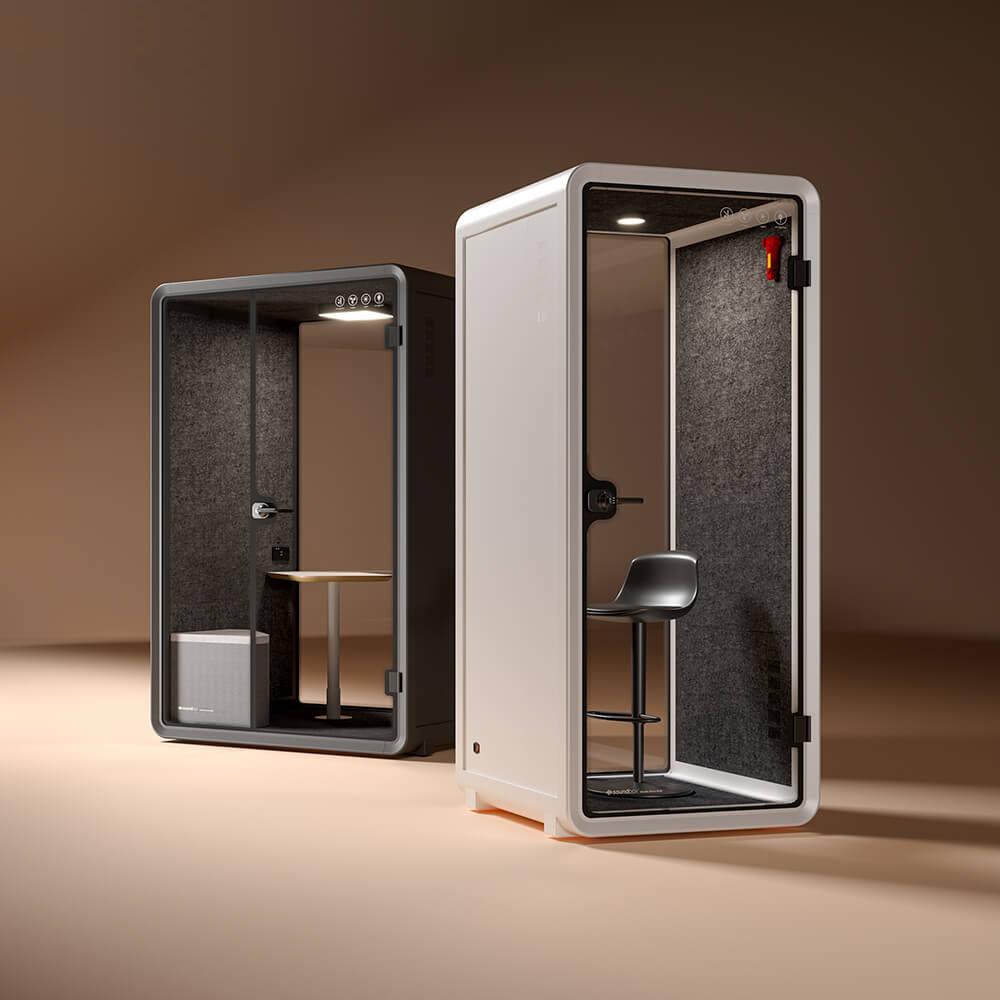
Create shared-space rules that make movement predictable
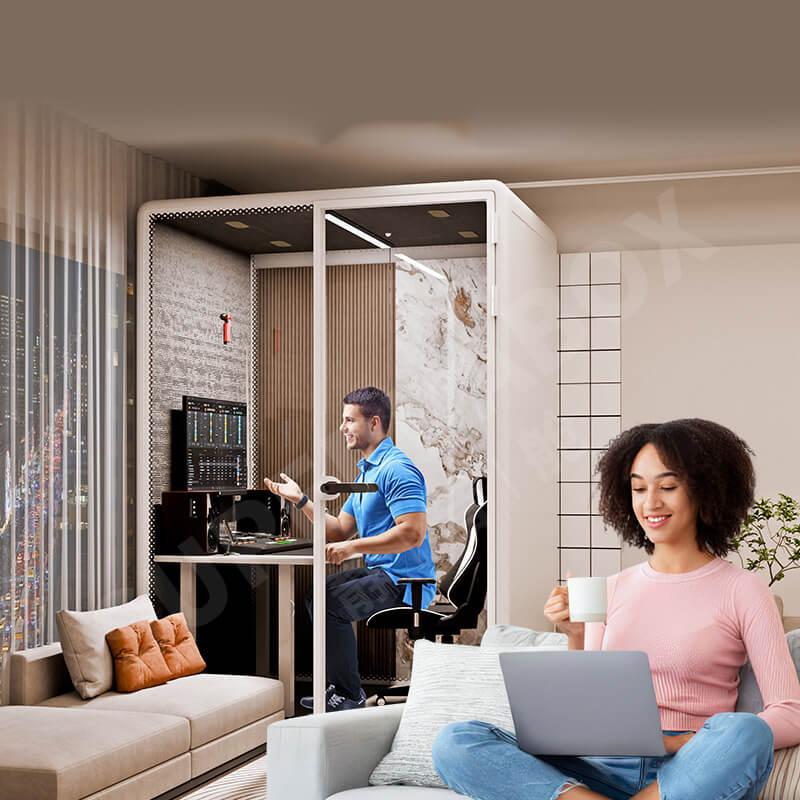
A booth can clarify a simple social handoff: routine exchange remains open, while speech-heavy or private work moves into the enclosure. Rehearse that handoff with teams. Check how users signal occupancy, handle urgent walk-up need, release no-show bookings, report faults, manage overruns, reset devices, and leave the unit ready. The rule should be brief enough to follow without turning ordinary office interaction into a permission process.
Observe whether colleagues remind one another constructively or whether the booth becomes a source of status and conflict. Fair access matters. Include different schedules, roles, mobility needs, and users who need more setup time. A social benefit that depends on one team monopolizing the pod or another group tolerating new queue noise is not a stable improvement.
Test the rule with exceptions. An urgent confidential call, a user who cannot reach the alternative, a fault during a booked session, and a meeting that unexpectedly gains another participant all require a handoff. The response should protect the person and the surrounding work without public explanation of sensitive details. If exceptions cause repeated conflict, revise the service design rather than adding more etiquette text.
Place feedback where owners can act on it. Users need a concise route for availability, privacy, comfort, access, technology, cleaning, and behavior concerns, while the review team needs enough context to separate causes. Close the loop by showing that a report was corrected, bounded, or declined. Unanswered feedback can itself reduce trust and make people retreat from the new shared-space arrangement.
Search for isolation effects floor loss and other counterevidence
Look actively for conversations that disappear because people remain enclosed longer than the task, users who avoid the booth, teams that substitute it for suitable meeting space, inaccessible entry, uncomfortable sessions, surveillance concern, queue friction, faults, and useful floor area displaced by the footprint. Compare these effects with the original problem instead of treating any use as success.
Run the pilot long enough for novelty and coaching to fade. Keep changes in attendance, team composition, project activity, office policy, and room supply in the record. Where a social mechanism passes but an adverse effect appears, try a bounded correction such as relocation, a clearer role label, a shorter booking rule, improved support, or reassignment. Retain only the effect that survives the correction and the repeated observation.
Close each hypothesis separately with a named reviewer. The call-relocation result may pass while fair access fails; private participation may improve while collaboration space is displaced. State the evidence, limitation, correction, and next review for each mechanism instead of averaging them into one score. This allows the office to retain a real benefit without defending every consequence of the installation.
Can an isolation booth reduce spontaneous office interaction?
Yes, if people stay enclosed beyond the assigned task, the unit replaces a useful open area, access rules discourage exchange, or teams substitute it for appropriate collaboration space. Observe where conversations go after installation. Use role labels, placement, booking limits, and reassignment to protect useful spontaneity, and reject the claimed benefit if withdrawal remains.
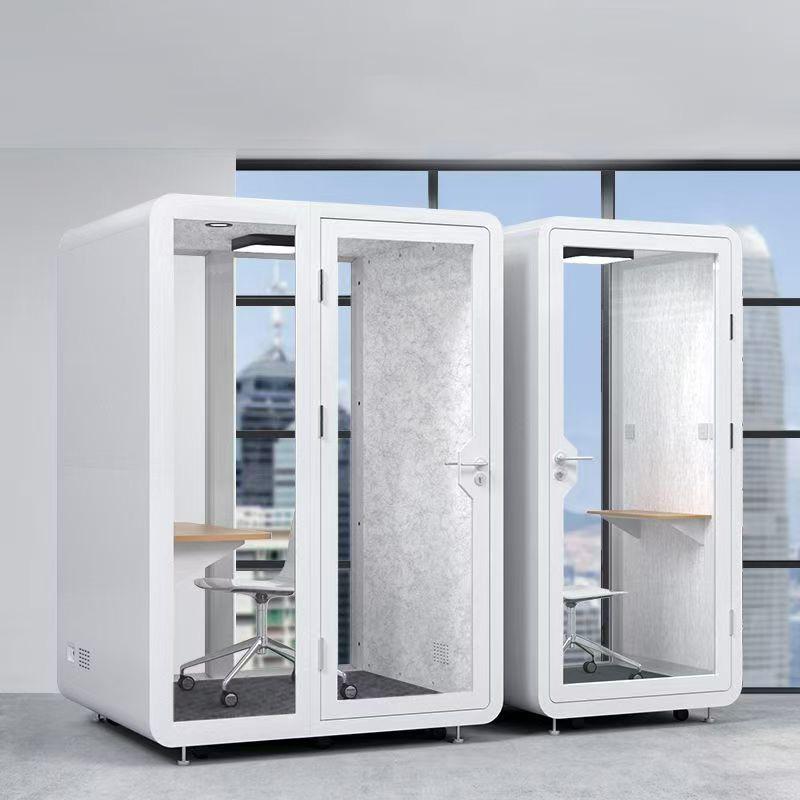
Which calls are the strongest candidates for relocation?
Start with recurring calls whose speech disrupts nearby work or whose privacy need makes open-desk behavior unsuitable, provided the booth supports the duration, devices, access, and listener boundary. Do not move group work, active workshops, or tasks that exceed occupied fit simply because they contain speech. Eligibility comes from the task route, not the calendar label.
How can a team measure social change without inventing a survey score?
Use bounded observations: conversation continuity, failed call relocations, return of collaboration areas, onsite completion of private tasks, queue conflicts, avoidance, support requests, and return to shared work. Record context and contrary events. Interviews can add explanation, but do not convert informal comments into a fabricated percentage or universal employee-satisfaction result.
What should change first when the booth creates queue conflict?
Identify whether the cause is role confusion, no-show bookings, overrun, poor reset, fault downtime, access, location, or genuine concurrent eligible demand. Correct the operating cause before adding capacity. Relabel, release bookings, shorten unsuitable reservations, improve fault response, or relocate as the evidence indicates, then repeat the social observation around the queue area.
Conclusion
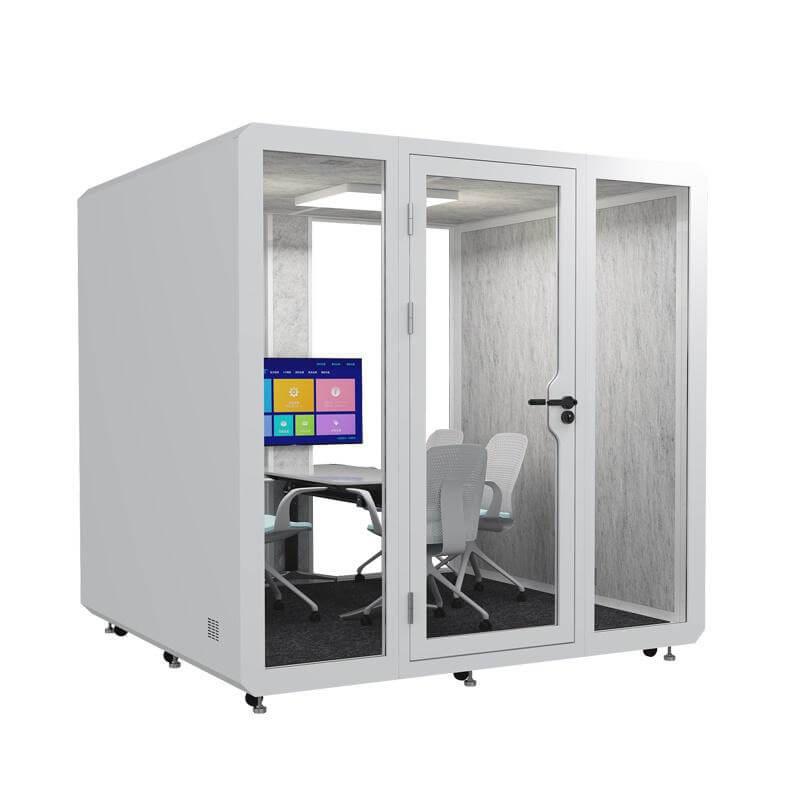
A soundproof isolation booth can make an office more social through four bounded mechanisms: relocating disruptive calls, preserving collaboration areas, enabling private participation, and clarifying shared-space behavior. Each mechanism depends on access, placement, privacy, occupied comfort, booking, support, fair use, and the surrounding office culture. None should be accepted from product presence alone.
Run a before-and-after pilot that keeps successful interactions and adverse effects in one record. Retain the mechanisms that repeat, revise placement or policy where the route fails, and stop using the social claim when isolation, exclusion, or displaced activity outweighs the benefit. Invite affected teams to review the separate mechanism results, especially where one group receives quiet while another absorbs the queue, footprint, or access cost. Publish the accepted booth role and feedback route after corrections, then repeat the observation during a different office rhythm. The next action is a behavioral review, not a generic productivity endorsement.

 Tel: +8613538031763
 Email: info@sopworkpod.com
 MP/WhatsApp: +8613538031763
 Manufacturer Address:Liucheng Lujiang District,Meixi Road,Nanan City,Fujian,China