
Need Help?
Please leave your contact information to get our latest catalog
Get In Touch Now >

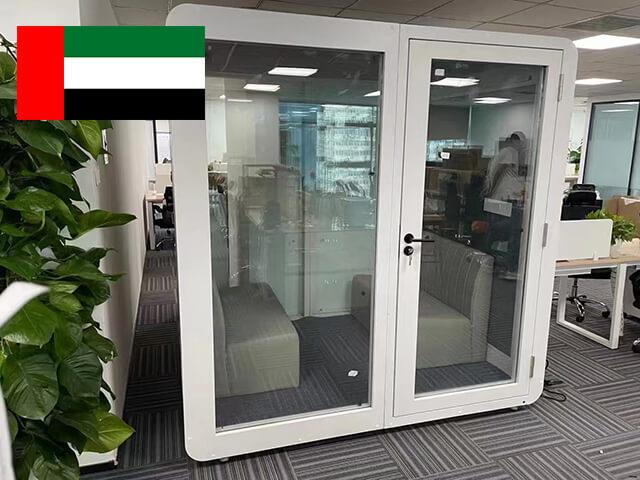
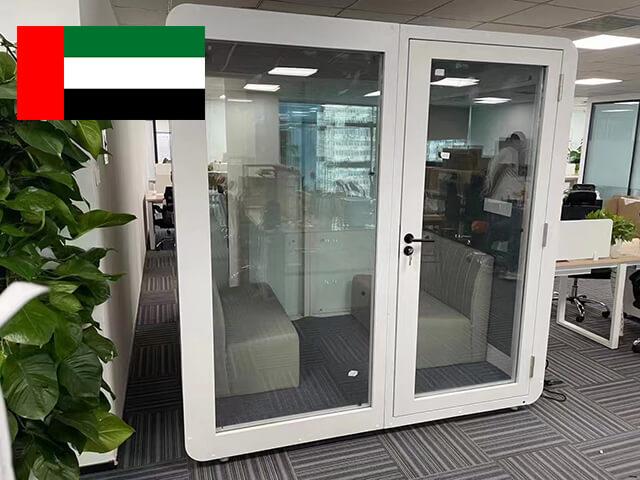
Evidence mode: Application Reference. No verified customer identity, customer feedback, measured outcome, quantity, or installation schedule is asserted.
This page is an application reference for soundproof meeting room pods in a modern corporate office in the UAE. The earlier text presented a Dubai client, a completed installation, and improved privacy and focus without a traceable project file. Those statements are not carried forward as customer facts.
Begin with the meetings that need a room: confidential discussions, hybrid reviews, interviews, short project sessions, or other defined work. Record intended occupancy, normal duration, speech and visual privacy needs, devices, materials, accessibility considerations, booking pattern, and the alternative space used when a pod is unavailable. The answer determines whether a meeting pod is suitable and which meetings must remain elsewhere.
The UAE location is context for project coordination, not evidence of a particular legal, technical, or market requirement. The owner and qualified local project parties must confirm applicable building, fire and life-safety, electrical, accessibility, landlord, and authority requirements for the actual site.
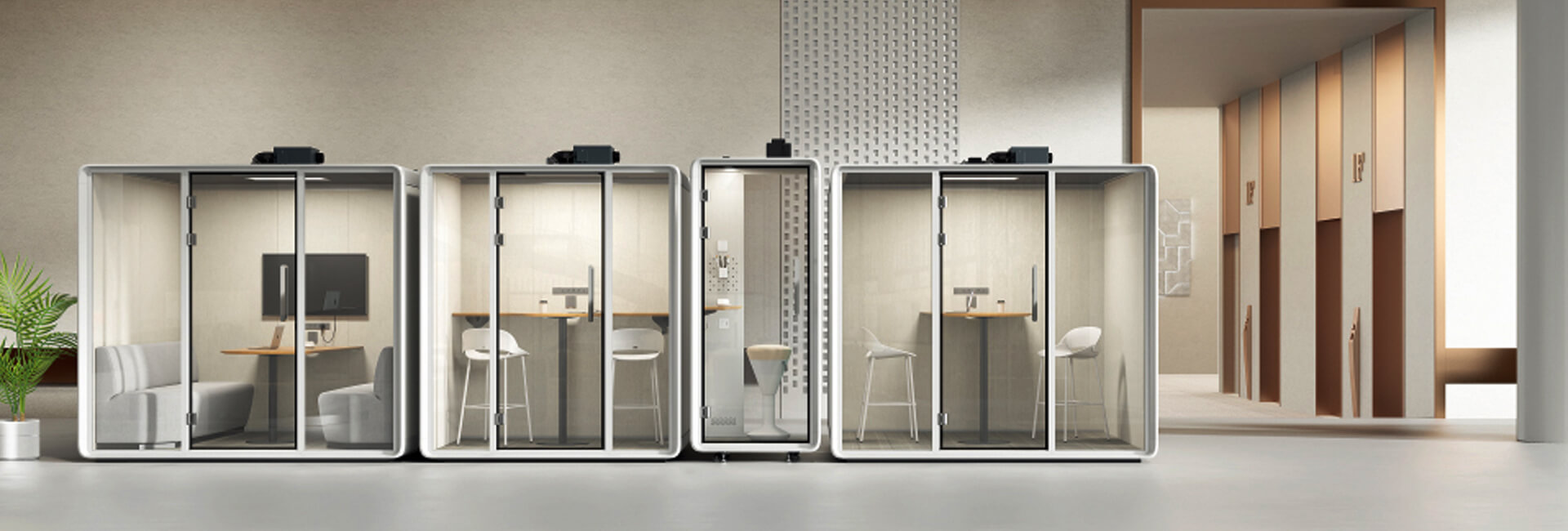
Separate the offered pod from work that belongs to the building or project team. The supplier should identify the exact model and options, product documents, packaged and assembled information, installation guidance, product-side electrical needs, ventilation arrangement, furniture, controls, and exclusions. The buyer should assign route surveys, floor and structural review where required, power and data provision, detector or sprinkler coordination, circulation, permits, protection, and reinstatement.
A requirement is not closed merely because it appears in a brochure. Each item needs an evidence source, an owner, and a hold point. If a local reviewer needs additional information, the open request should state the model, configuration, location, decision, and date needed rather than asking for a generic certificate bundle.
| UAE planning item | Evidence to request | Responsible party to assign | Hold point |
|---|---|---|---|
| Meeting requirement | Session types, occupancy, duration, privacy and device needs | Workplace owner | Eligible meetings and exclusions agreed |
| Product offer | Exact model, options, drawings, documents and exclusions | Supplier and procurement team | Configuration identity frozen |
| Building interface | Route, floor, power, data, circulation and local review | Qualified local project parties | Site dependencies accepted |
| Occupied use | Privacy route, interaction, technology, comfort and turnover notes | Facilities, IT and representative users | Observed issues closed or bounded |
Privacy should be traced across the whole meeting route. Mark participant approaches, waiting positions, nearby desks, corridors, glazing angles, screen sightlines, speaker positions, intended remote listeners, unintended listeners, the door, seals, ventilation paths, and the moments before entry and after exit. An enclosure can support the conversation while the approach still reveals who is meeting or what is visible on a screen.
Use ordinary speech and non-sensitive substitute material during observation. Keep the door and ventilation in the intended operating condition. Record audibility and intelligibility separately, state listener positions, and retain surrounding activity. Do not translate a visual impression or an unspecified product claim into an acoustic result.
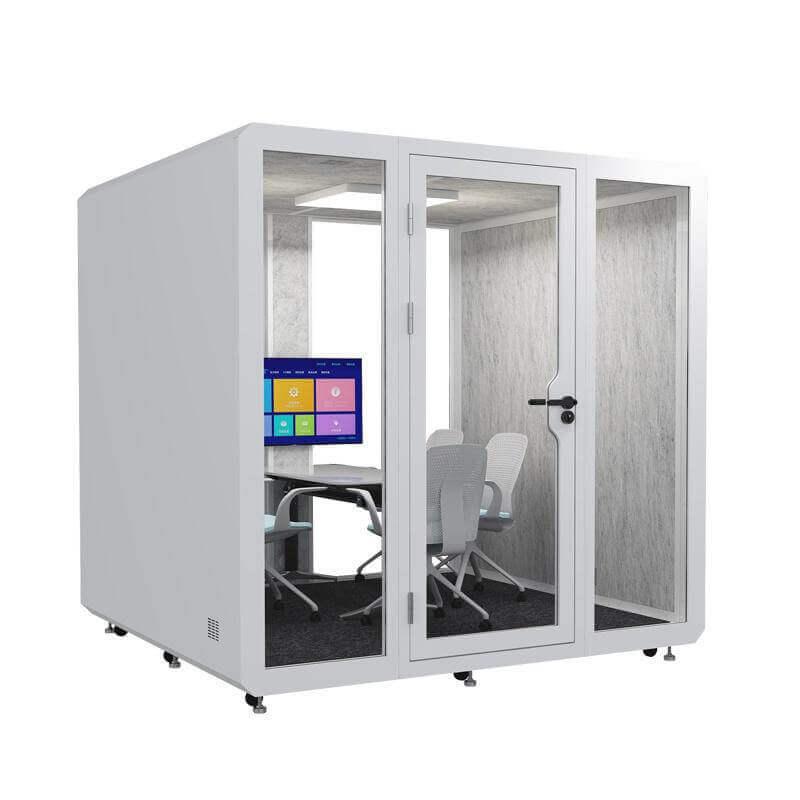
Run a representative agenda at the intended occupancy. Participants should enter with their normal laptops, documents, and personal items; sit or stand as intended; use lighting, airflow, power, data, camera, microphone, display, and content sharing; then exit and reset the room. Collect separate observations from onsite and remote participants.
Watch for blocked movement, awkward seating, poor camera framing, difficult controls, glare, cable conflicts, raised voices, open-door coping, interruptions, discomfort, or early termination. These observations do not prove a universal product result. They show whether the quoted configuration and proposed position support the defined meeting under the observed conditions.
The existing product reference can help identify the configuration to review, but it does not replace the site and occupied-use record: review the related office pod configuration.
Before handover, assign booking or walk-up rules, session limits, occupancy cues, setup and reset, cleaning, ventilation or filter checks according to supplier guidance, door and seal inspection, fault reporting, isolation, technical support, parts, warranty routing, and fallback rooms. Name the owner for each route and state what users should do when the pod is unavailable.
Keep a controlled file with the final model and options, drawings, accepted documents, delivery and installation records, site inspections, open actions, corrections, user guidance, maintenance information, and change history. Recheck the decision after relocation, material repair, service alteration, repeated faults, or a significant change in meeting demand. This turns the application reference into an operational planning record rather than a one-time sales story.
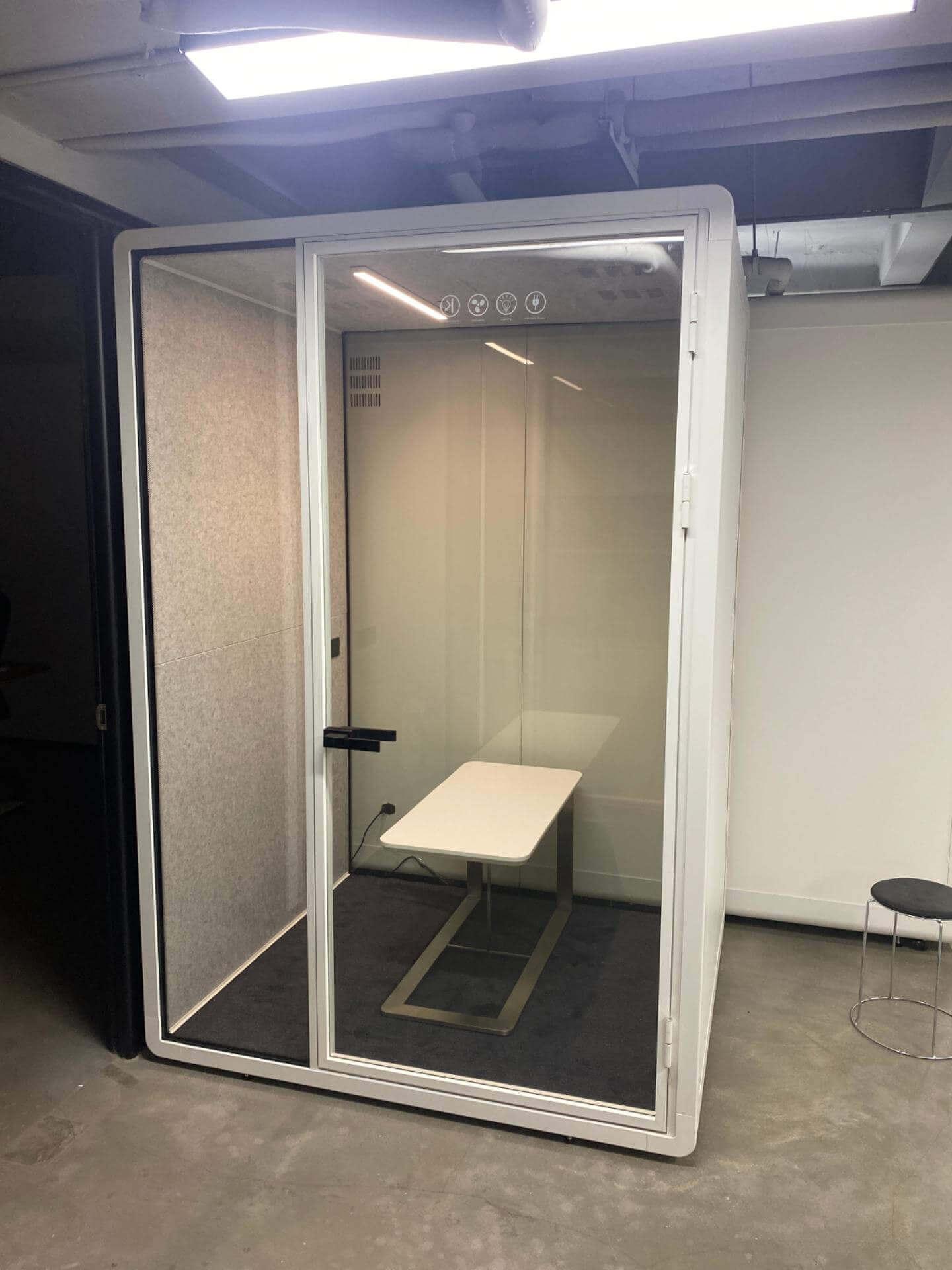
Soundproof meeting room pods can be considered for a UAE corporate office when a defined meeting need, a controlled product offer, local project responsibilities, a traced privacy route, an occupied technology trial, and an owned operating plan agree. This application reference does not assert that a named Dubai customer installed the pods or achieved a measured result.
The practical next step is to issue one interface register and one occupied-meeting record for the actual site. Keep limitations and unresolved requirements visible. A buyer can then approve, revise, relocate, or reject the proposed configuration without relying on invented feedback, schedule, performance, or project outcome claims.

 Tel: +8613538031763
 Email: info@sopworkpod.com
 MP/WhatsApp: +8613538031763
 Manufacturer Address:Liucheng Lujiang District,Meixi Road,Nanan City,Fujian,China