
Need Help?
Please leave your contact information to get our latest catalog
Get In Touch Now >


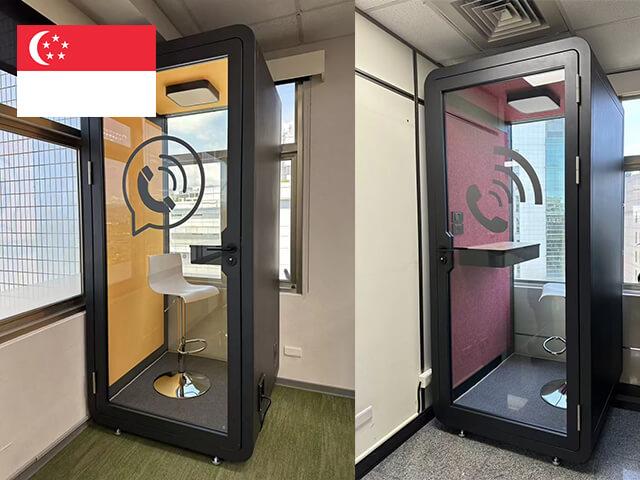
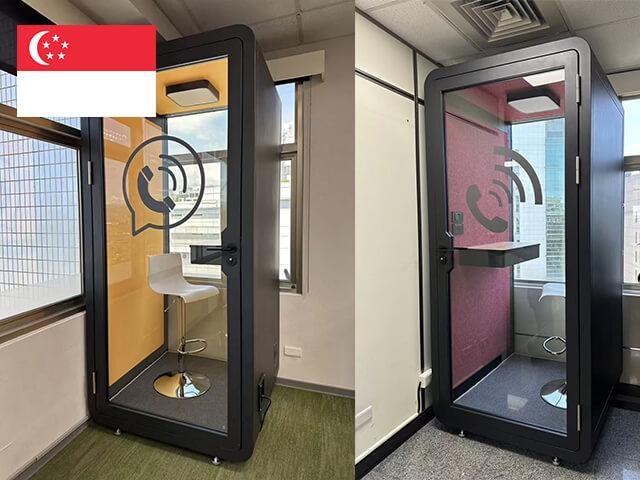
This Singapore reference concerns modular phone pods in a compact office. The archived page does not provide enough evidence to publish a technology-firm identity, a quantity of three, completed installation, employee response, privacy improvement, productivity gain, or a flexible-work result.
The retained product and image context is used for a lifecycle map instead. The map asks how a pod will be selected, placed, operated, inspected, relocated, and eventually changed without treating modularity as a guarantee of effortless movement.
Record where private calls and focused video meetings originate, when demand peaks, and how far users can reasonably travel. Compare candidate zones with circulation, nearby teams, reception or visitor areas, visual privacy, daylight, heat sources, room airflow, power, cleaning, and service access.
A convenient position may also be a noisy or congested position. A remote corner may reduce disruption but lower use. The project team should state the tradeoff and observe it rather than claiming that any pod location will improve employee experience.
Use a simple floor walk at different times of day. Mark where callers begin searching, where queues or interruptions appear, and which routes become busy. This time-based evidence can reveal a placement issue that is invisible on a static plan.
Ask the supplier which components are designed to be assembled, disassembled, replaced, or moved, under what conditions, and by whom. Record package information, handling points, tools, connection work, inspection steps, and any restrictions. A modular product can still require trained labor, protected components, route clearance, and building coordination.
The approved configuration should identify door orientation, glazing, interior furniture, controls, lighting, ventilation, power, finishes, options, and exclusions. Images are useful references but should not replace the written schedule.
Maintain supplier-stated clearances and access to relevant components. Avoid blocking circulation, doors, panels, cleaning routes, or building systems. Confirm the power interface and other enabling work with qualified local parties. Singapore is the location context, not a substitute for local building, fire, electrical, accessibility, or property review.
Establish routine checks for visible condition, door operation, controls, lighting, airflow, furniture, electrical accessories, and cleanliness. Record issues and owners so deterioration is addressed before a relocation decision is made.
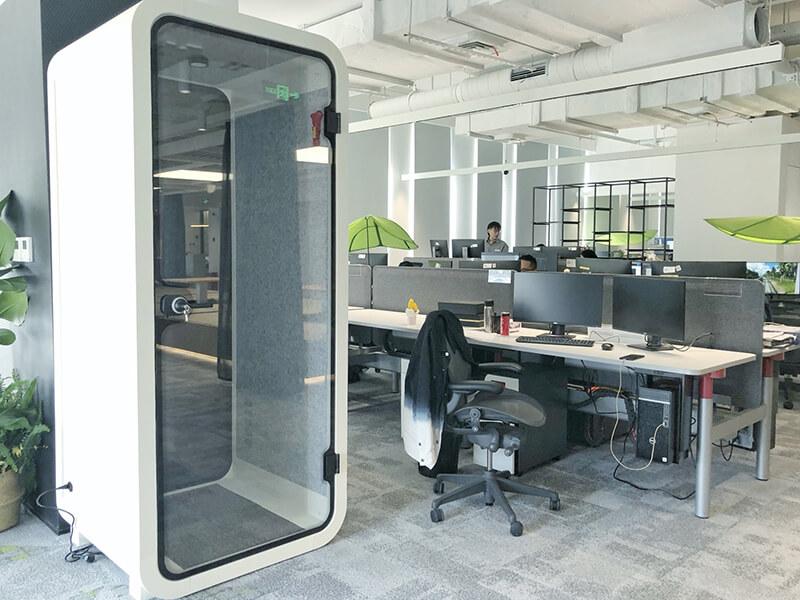
A move should begin with a new use and site review. Confirm the destination, route, services, permissions, clearances, room conditions, disassembly method, packaging or protection, responsibility, and post-move inspection. Preserve component identification and configuration records throughout the move.
Do not relocate a fault without diagnosing it. Review open maintenance issues first and agree whether repair, replacement, or supplier input is needed. The move record should state what changed and what must be reverified before use.
| Lifecycle gate | Decision input | Required record | Do not proceed when |
|---|---|---|---|
| Select | Use demand, configuration, evidence and scope | Approved requirement and quotation | Material assumptions remain open |
| Place | Room fit, access, services and clearances | Measured layout and interface list | Position conflicts are unresolved |
| Operate | Guidance, cleaning, inspection and issue ownership | Operating and maintenance log | Critical faults remain open |
| Relocate | New destination, route, method and responsibilities | Move plan and component record | Route or service work is unconfirmed |
| Restart | Condition, configuration, controls and documents | Post-move handover | Acceptance actions prevent use |
At initial handover and after any move, verify identity, configuration, condition, placement, controls, included items, documents, and open actions. If the project has a specific performance requirement, apply the agreed verification method under stated conditions. Keep impressions separate from measured evidence.
Maintain a component and change register throughout ownership. The register should connect replacement parts, finish changes, control updates, repairs, and moves to dates, responsible parties, and supporting documents. When a future supplier or facility manager reviews the pod, the current state should be clear without relying on memory.
Use retirement or major refurbishment as another decision gate. Confirm ownership of disconnection, disassembly, handling, storage, reuse, disposal, and building reinstatement. Product information and local requirements should guide those activities; a general claim of modularity does not define an end-of-life method.
The phone booth product family can help teams identify candidate modular phone pods. The lifecycle decision should remain grounded in the chosen configuration, actual site, supplier guidance, and assigned responsibilities.
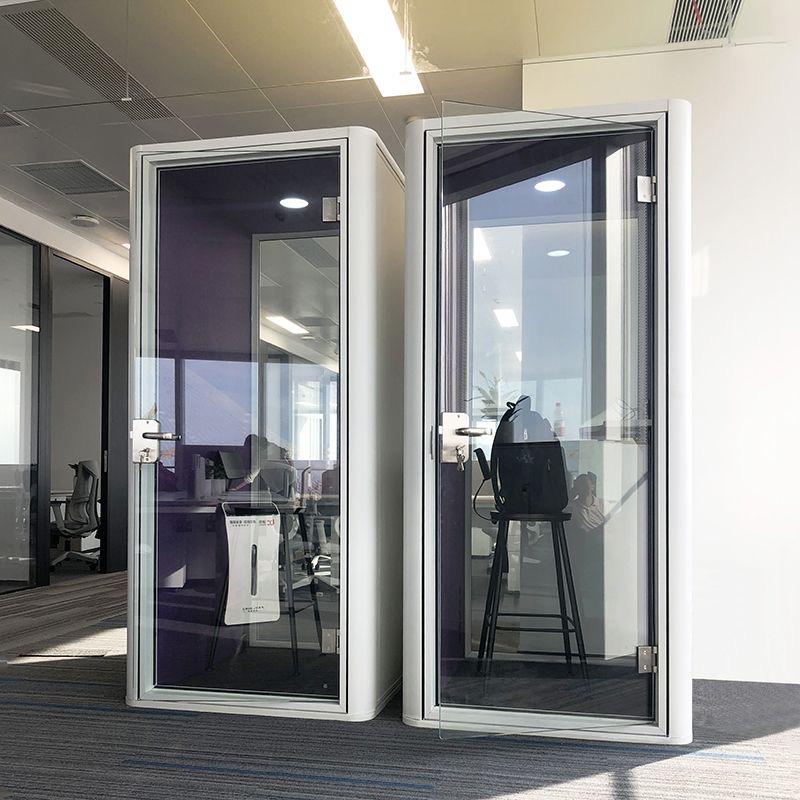
The Singapore reference now treats modularity as a controlled lifecycle, not as an automatic result. Map demand zones, define what can be moved, preserve service access, establish relocation gates, and reclose the evidence file after each change. This is transferable guidance without unsupported quantities, customer feedback, or productivity claims.

 Tel: +8613538031763
 Email: info@sopworkpod.com
 MP/WhatsApp: +8613538031763
 Manufacturer Address:Liucheng Lujiang District,Meixi Road,Nanan City,Fujian,China