
Need Help?
Please leave your contact information to get our latest catalog
Get In Touch Now >

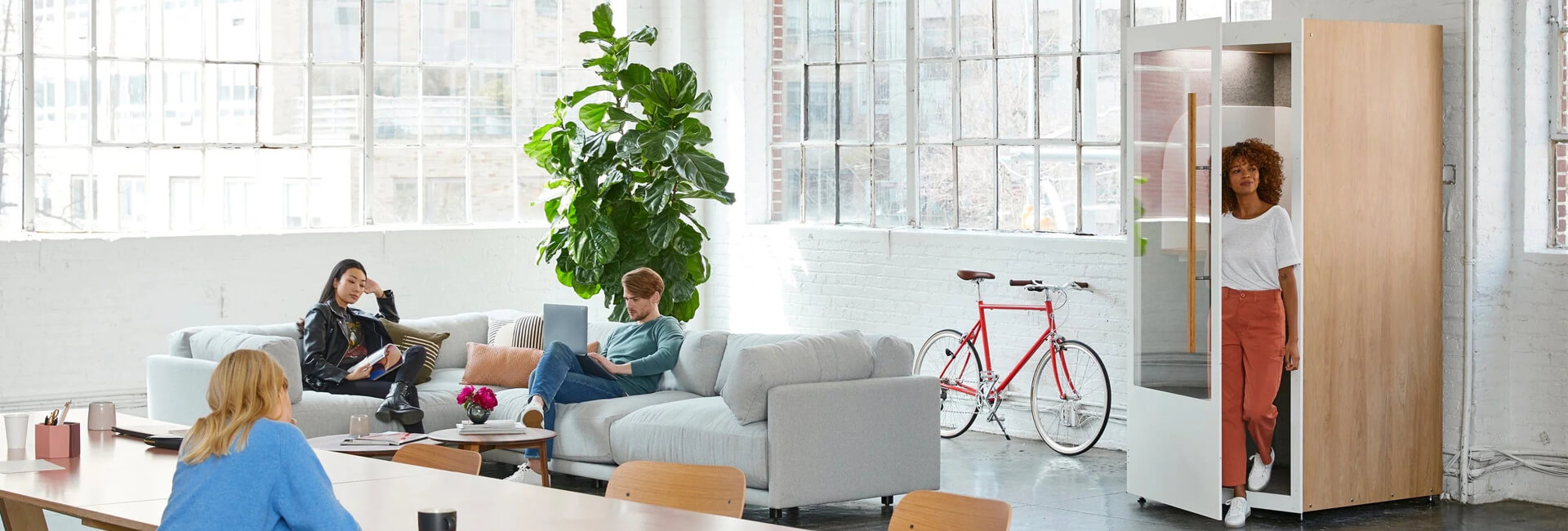
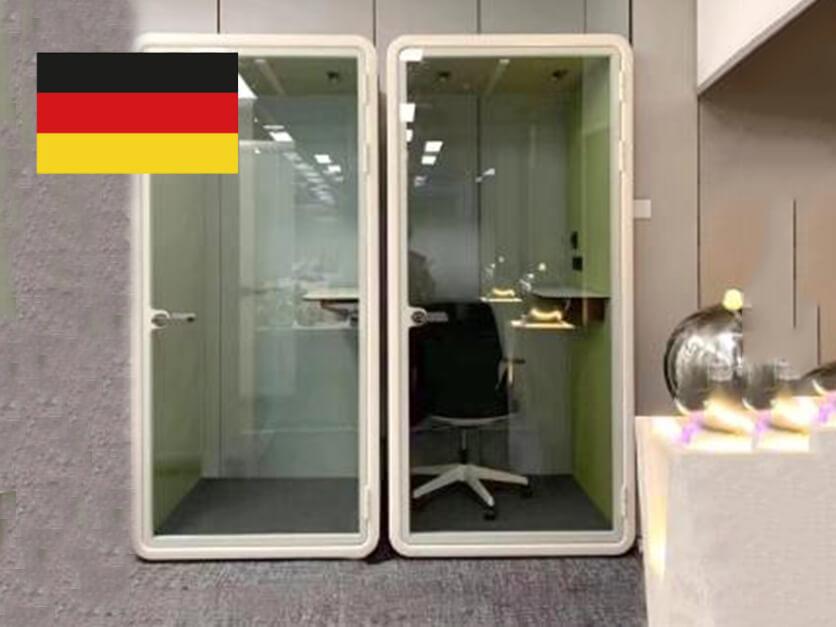
This office phone booth case study describes a Berlin planning reference for private calls inside an open office. The retained title and images establish the product and location context. They do not verify a named consulting company, an order quantity, a stated decibel value, a delivery period, employee feedback, or a productivity result.
Instead of repeating those unsupported details, the page follows one confidential-call journey from preparation to close-out. It gives procurement and facility teams a practical way to decide where a booth belongs, what information a supplier must provide, and how everyday use will be governed.
List the conversations that should move away from open desks, such as client calls, interviews, sensitive internal discussions, or focused video meetings. For each activity, record likely duration, equipment, visual privacy, speech-privacy expectation, accessibility need, and whether supporting documents must be used inside the booth.
This list is more useful than a general request for quietness. It tells the project team which activities must be supported and which should remain in another room. It also avoids presenting an office booth as a substitute for every type of meeting or regulated conversation.
Review likely call demand and identify positions close enough to users without placing the entrance in a congested aisle. Check door swing, adjacent desks, emergency routes, daylight, heat sources, room airflow, cleaning access, and any clearances identified by the supplier. A booth beside a social zone may remain convenient but should be assessed under realistic surrounding activity.
The final position should also support a discreet user journey. A person entering or leaving a sensitive call should not be forced through a waiting group or expose a screen to nearby desks. These are layout observations, not claims about the product's acoustic performance.
Compare the exact quoted configuration rather than supplier headlines. Ask for drawings, included equipment, electrical and ventilation information, material descriptions, operating guidance, delivery packaging, assembly responsibilities, and the conditions attached to any performance statement. If the office has a specific standard or approval process, the local project team should define it and request applicable evidence.
Keep assumptions visible. A finish shown in an image, for example, may not be the finish in the quotation. A test result may apply to another model or condition. The procurement file should connect each conclusion to the proposed unit and the intended Berlin site.
| Call stage | User or buyer question | Record needed | Failure response |
|---|---|---|---|
| Before entry | Is the booth available and suitable for this conversation? | Use policy and booking rule | Choose another approved space |
| During a call | Are door, airflow, lighting, power, and privacy behavior correct? | Operating guidance | End use and report the issue |
| After a call | Has confidential material been removed and the booth reset? | Reset checklist | Notify the responsible team |
| At inspection | Does the unit match the approved configuration and condition? | Handover or maintenance record | Log owner and close-out date |
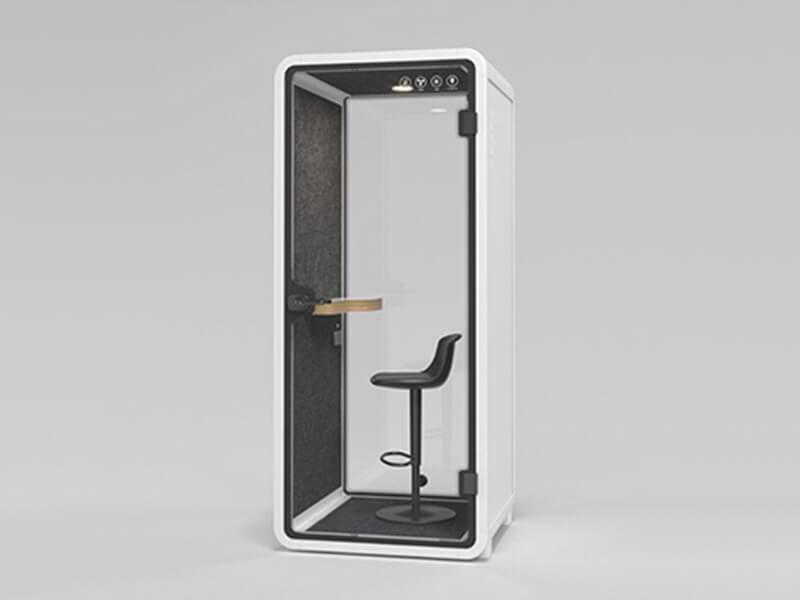
Decide how the booth will be booked or shared, what users should check before entry, where personal items can be placed, and how faults will be reported. Include a short reset routine covering visible cleanliness, door condition, controls, lighting, airflow, power access, and any displayed guidance.
Privacy also depends on behavior. Users should close the door, use appropriate voice levels, protect screens, remove confidential notes, and leave the booth ready for the next person. Facility teams need a clear escalation route when an operating issue cannot be corrected through the normal reset.
At handover, compare the delivered unit with the approved configuration and record visible condition, placement, access, controls, included accessories, documentation, and unresolved actions. Any project-specific performance check should use the agreed method and conditions. An informal user impression should not be stored as a technical result.
Before opening the booth for general use, run a witnessed operating walkthrough with the facility owner. The walkthrough should cover entry, door closure, controls, lighting, airflow, power access, emergency reporting, cleaning, and the route for taking a booth out of service. Record exceptions in plain language so a later reviewer can distinguish an accepted limitation from an unresolved defect.
For product discovery, buyers can review the office phone booth range. The purchase decision should still rely on a controlled quotation, site record, and acceptance plan for the actual installation.
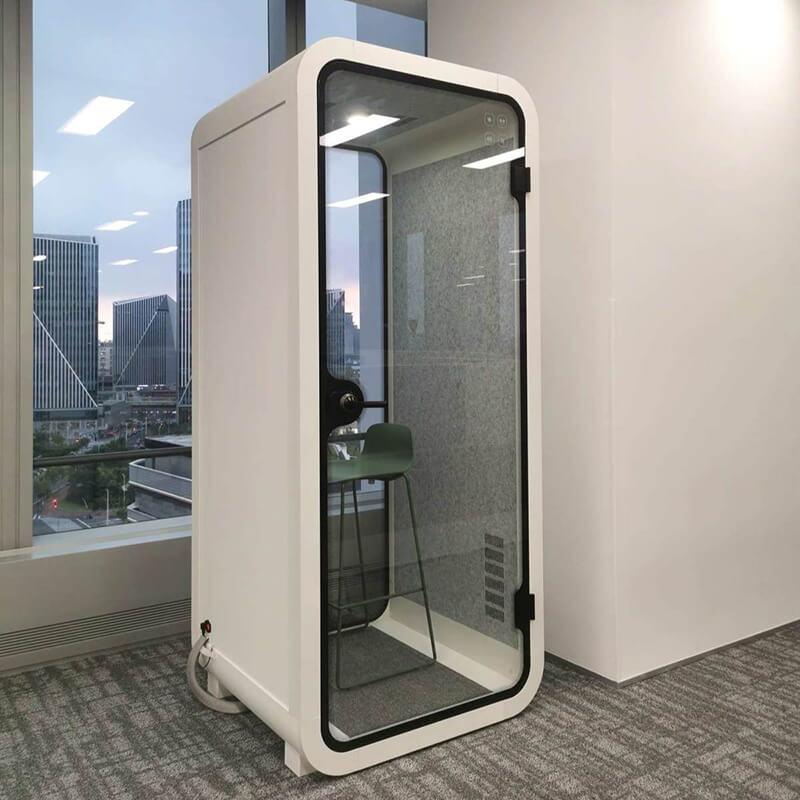
The Berlin reference is best used as a confidential-call workflow. Define the conversations, select a responsible location, obtain configuration-specific evidence, establish daily operating behavior, and close handover with observed conditions. This supports a defensible decision without inventing a customer identity, quantity, schedule, or outcome.

 Tel: +8613538031763
 Email: info@sopworkpod.com
 MP/WhatsApp: +8613538031763
 Manufacturer Address:Liucheng Lujiang District,Meixi Road,Nanan City,Fujian,China