Need Help?
Please leave your contact information to get our latest catalog
Get In Touch Now >


A downloadable catalog is the opening record in a procurement trail, not the final proof of suitability. The Meeting Pods for Offices and Hybrid Teams page should therefore be read against an identified user group, floor plan, session pattern, equipment list, delivery route, and acceptance owner. The catalog remains a useful reference without being asked to prove more than it actually contains.
Translate Meeting Pods for Offices and Hybrid Teams from a catalog name into a working requirement. Name the expected occupants, normal and peak session length, devices, furniture, privacy expectation, booking method, cleaning interval, and nearby activity. Keep mandatory conditions separate from preferences about colour, trim, or branding.
A useful review of meeting pods for offices and hybrid teams includes explicit stop criteria. The team might reject a model if the door conflicts with circulation, the table cannot support normal devices, or maintenance access disappears. This record is especially helpful when several stakeholders review different catalog pages.
Test the proposed Meeting Pods for Offices and Hybrid Teams configuration against meeting workflow and collaboration. Review entry and exit movement, airflow, meeting duration, occupancy, seating, table reach, shared displays, and camera framing. Compare the ordinary workflow first, then repeat the review with a demanding but credible scenario.
Before approving meeting pods for offices and hybrid teams, resolve this specific concern: If site work, supplied scope, and user behavior are blended together, responsibility for the meeting workflow and collaboration result of Meeting Pods for Offices and Hybrid Teams becomes unclear. An unverified statement should remain an open item rather than being copied into the approval note. The recommended evidence path is equally concrete: Define the required meeting workflow and collaboration observation for Meeting Pods for Offices and Hybrid Teams, document the exact setup, and retain the result with the model and drawing revision.
The product family name Meeting Pods for Offices and Hybrid Teams must be narrowed to a controlled configuration. Compare panels, door and glass interfaces, seals, floor and ceiling elements, ventilation, lighting, outlets, controls, furniture, finishes, fasteners, and service openings. Cleaning and replacement access belong in the same review as visual finish. The meeting pods for offices and hybrid teams product family provides a current internal reference, while the controlled order documents remain authoritative for the project.
Trace meeting pods for offices and hybrid teams from unloading point to final position before approving delivery. A route survey should consider the largest rigid element rather than the finished external dimensions alone. Any permit, landlord, facility, or safety approval should have an owner outside the general product description.
The commercial sheet for Meeting Pods for Offices and Hybrid Teams should expose every included, optional, and excluded activity. Record allowances and provisional items beside the party that carries the risk if they change.
Define how meeting pods for offices and hybrid teams enters normal use and how faults will be reported. Retain serial or model identity so future service refers to the installed configuration rather than a generic family. This closes the gap between buying an object and operating a workplace asset.
| Decision field | Question for this catalog | Evidence to retain |
|---|---|---|
| Use case | Which users, tasks, equipment, and session pattern define Meeting Pods for Offices and Hybrid Teams? | Approved use brief and scaled layout |
| Operating lens | How will the team assess meeting workflow and collaboration for meeting pods for offices and hybrid teams? | Named observation or trial record |
| Ordered build | Which components and options make this Meeting Pods for Offices and Hybrid Teams configuration complete? | Controlled drawing and option schedule |
| Site boundary | Who owns access, utilities, local review, assembly, and testing for meeting pods for offices and hybrid teams? | Responsibility matrix with due dates |
| Handover | What evidence releases Meeting Pods for Offices and Hybrid Teams into normal operation? | Acceptance file and open-item closure |
Use this matrix for Meeting Pods for Offices and Hybrid Teams at each supplier review. Keep exclusions beside the relevant question so price never becomes detached from scope.
Which boundaries belong in the first Meeting Pods for Offices and Hybrid Teams quote request?
Include product, site, delivery, installation, connection, local review, testing, training, documentation, warranty, and open assumptions for Meeting Pods for Offices and Hybrid Teams.
Does Meeting Pods for Offices and Hybrid Teams remove the need for a representative trial?
Approval needs the quoted Meeting Pods for Offices and Hybrid Teams configuration, controlled documents, assigned responsibilities, site review, and agreed acceptance evidence in addition to the catalog.
How can facilities staff identify the installed meeting pods for offices and hybrid teams later?
Keep the approved drawing, option and finish schedule, quotation, responsibilities, logistics, acceptance, care, warranty, and exception closure with meeting pods for offices and hybrid teams.
When should the Meeting Pods for Offices and Hybrid Teams selection be reviewed again?
Retain the Meeting Pods for Offices and Hybrid Teams download as orientation, but use final model identity, approved configuration, handover documents, and current supplier instructions for operation.
The Meeting Pods for Offices and Hybrid Teams catalog can support a professional shortlist when the team defines the operating need, tests meeting workflow and collaboration, controls the ordered build, and records the site and lifecycle boundary. The resulting record connects early research with quotation, delivery, acceptance, and normal operation.
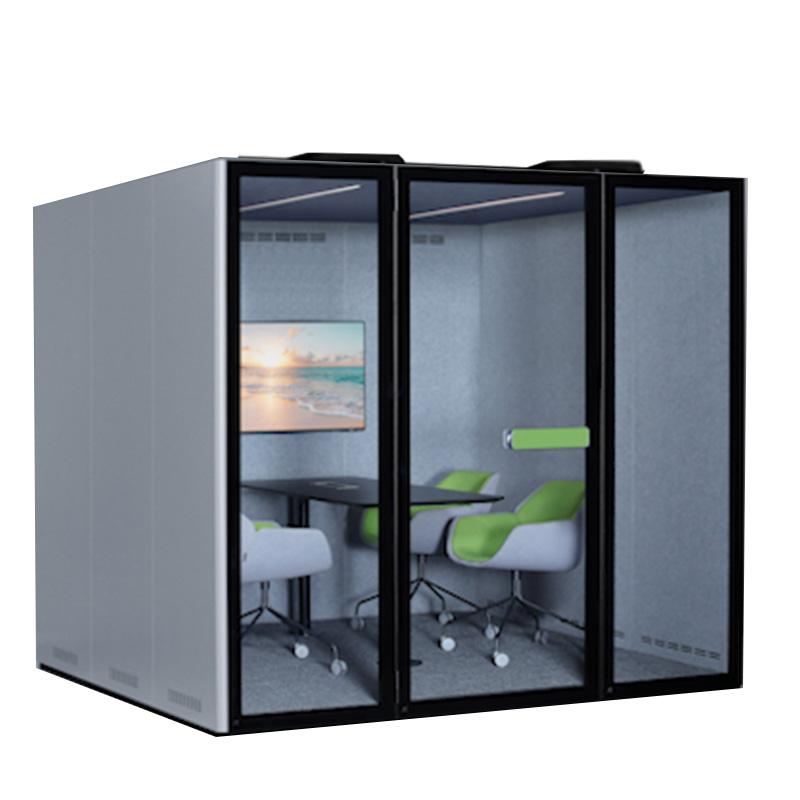
 Loading...
Download our latest Meeting Pods for Offices and Hybrid Teams catalog to
explore product features,
models, and technical specifications. Submit the form to get instant
access.
Submit & Download
Loading...
Download our latest Meeting Pods for Offices and Hybrid Teams catalog to
explore product features,
models, and technical specifications. Submit the form to get instant
access.
Submit & Download

 Tel: +8613538031763
 Email: info@sopworkpod.com
 MP/WhatsApp: +8613538031763
 Manufacturer Address:Liucheng Lujiang District,Meixi Road,Nanan City,Fujian,China